The income tax trap that shrinks your mortgage
Why keeping your income low can quietly cap your borrowing.
Last reviewed:

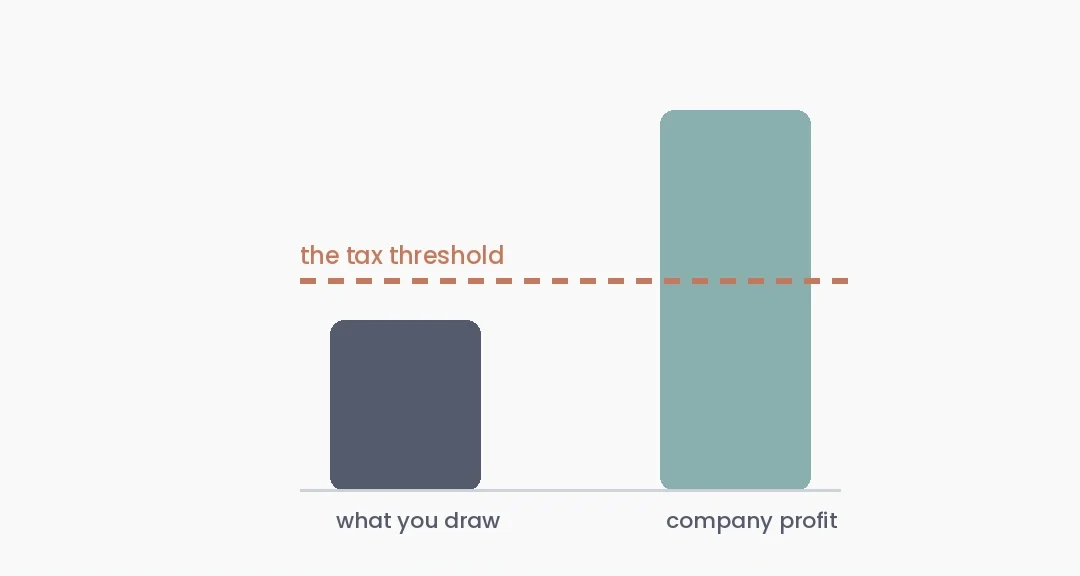
Many business owners deliberately keep the income they draw to a set level. Just under the point where higher rate tax kicks in. Below the marks where personal allowances start to taper or childcare support is affected. That is often a sensible plan, and it is a decision for you and your accountant. I am not a tax adviser and I would never tell you to change how you are paid.
But there is a knock on effect that rarely gets mentioned, and it lands squarely on your mortgage.
How most lenders read a director's income
When you apply for a mortgage as a limited company director, most lenders start with your personal tax calculations. They ask for your SA302s and tax year overviews, look at the salary and dividends you have drawn, and usually average the last two years.
That is a perfectly reasonable method for someone whose income all arrives as salary. It works far less well for you, because your personal tax return only shows the slice of the business you chose to take out.
When a lender looks only at the income you draw, a carefully managed tax position can look like a modest salary. The mortgage on offer shrinks to match it. You can end up assessed as if you earn far less than your business actually makes.
Where the rest of your income went
Here is the part worth knowing. The money did not disappear. It is sitting in the company as profit. And a number of lenders will consider your share of that company profit, not only what you take out personally.
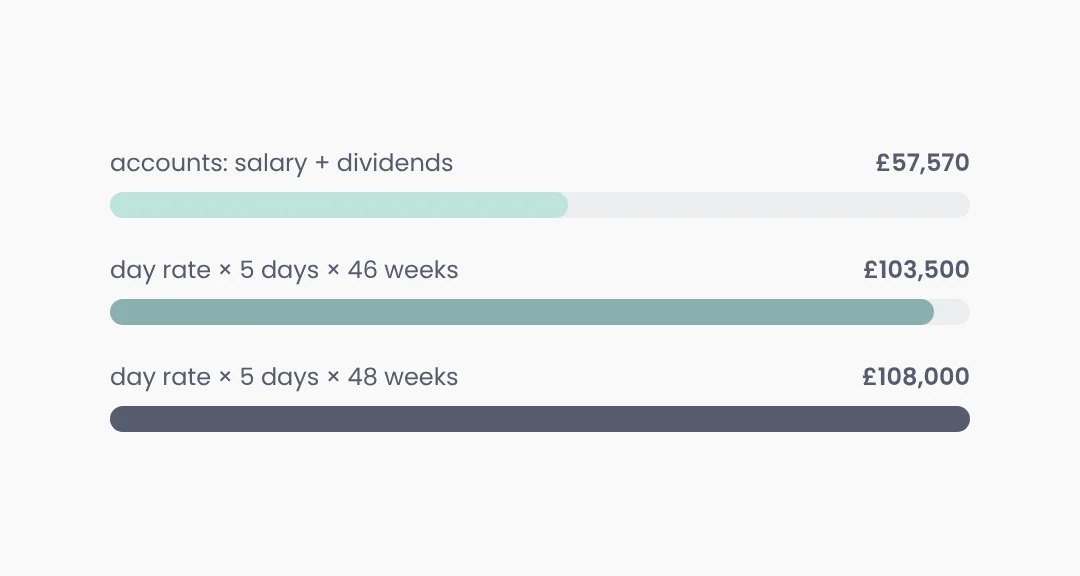
A simple illustration. Imagine a director who owns all of their company. They draw a salary of £10,000 and dividends of £40,000, so £50,000 a year in total, which keeps them comfortably inside the tax position their accountant has planned. The company itself makes £110,000 profit after corporation tax, and most of it stays in the business.
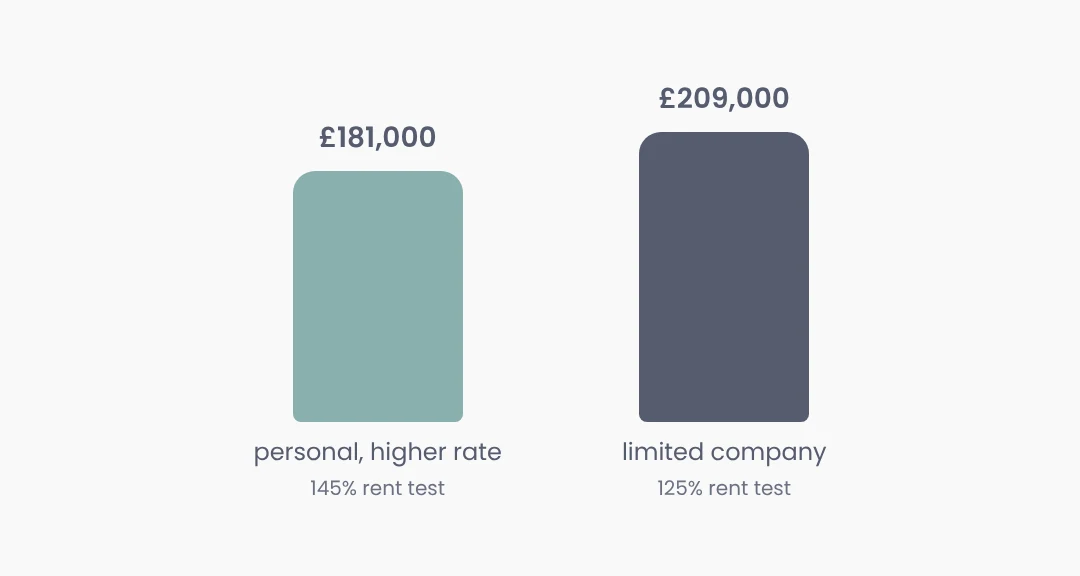
A lender that only uses drawn income works from £50,000. A lender that uses salary plus share of net profit may work from £120,000: the £10,000 salary plus the £110,000 profit. Same person, same accounts, same tax bill. The figures are illustrative only, and each lender has its own rules, but the gap shows why the choice of lender matters so much.
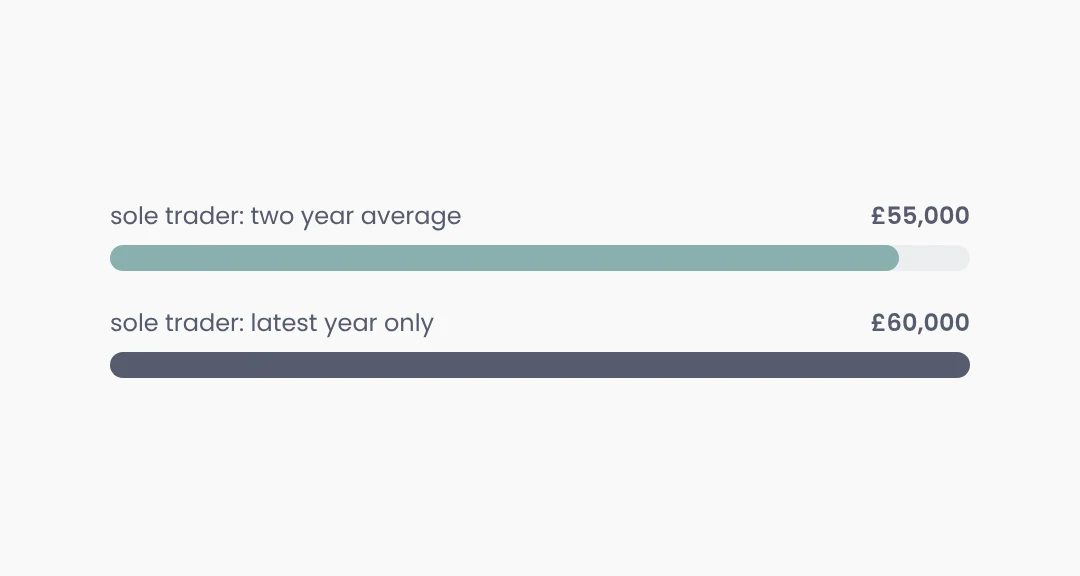
That single difference can change the size of mortgage available, sometimes significantly. It is stronger again where the business is growing, because some lenders will look at your latest year of profit on its own rather than averaging it down against leaner earlier years. I cover that in more detail in your best year yet, averaged away by the lender.
What those lenders will want to see
Lenders that count retained profit do not simply take the bigger number. They want to be comfortable that the profit is real, sustainable and genuinely yours. In practice that usually means:
- Your shareholding. They will apply your percentage of the company's profit, so a 50% shareholder is assessed on half. Some treat smaller shareholdings very differently, which I explain in own under 20% of your company?
- How long you have held it. Most want a track record, often two years of accounts, although some will consider less.
- Accounts your accountant stands behind. Full accounts, ideally signed or prepared by a qualified accountant, and sometimes a reference from them.
- A business that can afford it. Some lenders check that the profit is not all needed as working capital and that the company is in good financial health.
- The full structure. If you own shares in more than one company, the picture can be wider still, as I set out in when your income lives in four companies.
What you will usually need
- Two years' full accounts for each company you hold shares in
- SA302s and tax year overviews for the same years
- Recent business and personal bank statements
- Details of your shareholding and when you acquired it
- Your accountant's contact details, as some lenders ask to speak to them
Keeping your tax planning intact
So you may be in a position where you keep following your accountant's advice to the letter, change nothing about your tax, and still access a larger mortgage, simply because the case is presented on the full picture rather than the slice you draw.
Let me be clear on the boundaries. Keep taking proper tax advice. The thresholds and their effects on allowances and childcare are a matter for your accountant, and they move over time. My job is the mortgage side. Once your income is structured the way you and your accountant want, I look at which lenders can read the whole picture and assess you fairly on it. All lending is subject to underwriting and valuation.
What I would avoid is the reverse: changing how you pay yourself in the months before an application purely to make a mortgage work, without talking it through with your accountant first. It can cost you tax, and it may not be necessary once the right lender is reading your accounts.
Before you apply anywhere
If you have kept your drawings deliberately low and assumed that caps your borrowing too, it may not. That is the whole point of this piece.
The most useful thing you can do is have the conversation before an application goes in, because a decline or a low offer from the wrong lender is harder to undo than it is to avoid. Our page on mortgages for company directors explains how we approach these cases. If it sounds like you, send me a message and we can talk it through.
Your home is at risk if you do not keep up repayments on a mortgage or other loan secured on it.
Wondering how a lender would read your income?
Tell us a little about your situation and we’ll arrange a call.
Talk to an adviser