Own under 20% of your company? Some lenders stop counting your dividends
Why a minority shareholding can quietly shrink your mortgage, and which lenders still count your dividends.
Last reviewed:

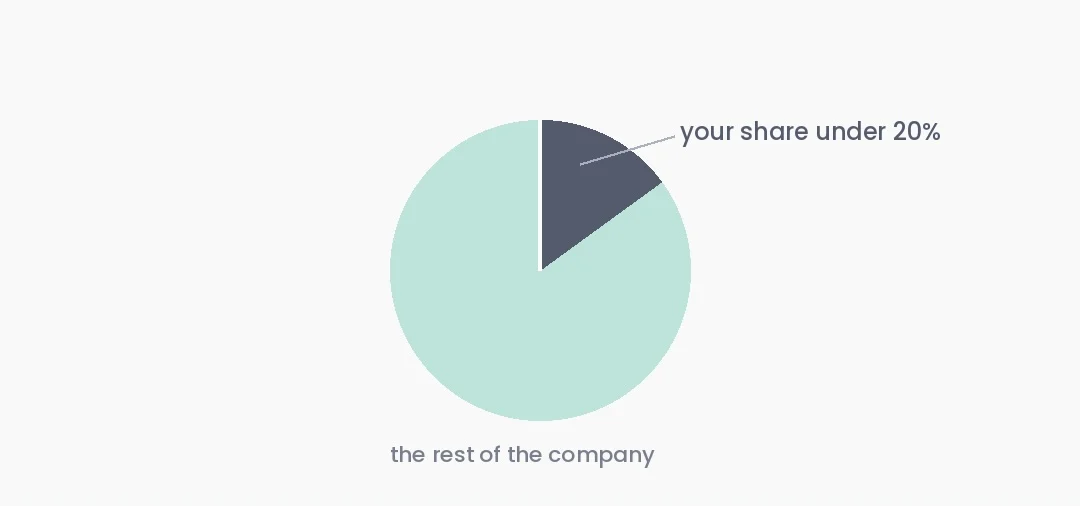
A director or senior employee who owns less than 20% of their company can find that some UK mortgage lenders discount their dividends or ignore them altogether. Other lenders will use full salary and dividends from the last two years of personal tax records, however small the shareholding. The choice of lender can therefore change how much a minority shareholder may be able to borrow.
Why does the size of a shareholding matter to a lender?
Many lenders use shareholding to decide how to assess a company director. The usual line is 20%, though some lenders use 25%. A director above that line is treated as self employed and assessed on salary and dividends, or on a share of company profit. A shareholder below the line is often assessed more like an employee.
What happens to dividends below 20%?
Some lenders ignore a minority shareholder's dividends completely. Others treat the dividends as investment income rather than earned income and count only part of them, in some cases around two thirds.
That means a real, regular income, the dividends the shareholder actually lives on, gets discounted purely because of the size of the stake. A minority shareholder can fall into a gap: too few shares to be assessed on company profit, and too much dividend income for it to be set aside without hurting their borrowing.
Who does this affect most?
Two groups are affected most often:
- Senior employees with a minority stake in a business they helped build, paid a salary plus dividends.
- Families using alphabet share structures, where dividends are shared across a spouse or family members as part of tax planning.
How shares and dividends are structured is a decision for the shareholder and their accountant. A mortgage broker's role is to find a lender that reads the structure as it is.
Do any lenders count all of a minority shareholder's dividends?
Yes. Some lenders will use 100% of salary and dividends, taken from the last two years of personal tax records (SA302s and tax year overviews), regardless of shareholding, even down to 1%. For a minority shareholder, that single difference can change the mortgage available considerably. All lending is subject to underwriting and valuation.
A recent example
The managing director of a midsized logistics business owned under 8% of the company. Another broker had come back with a figure that badly undercounted his dividends. Placing the case with a lender that used his full salary and dividends across two years produced an offer roughly double the original. He changed nothing about how he was paid. Every case is different, and this example does not mean the same outcome is available to anyone else.
What should a minority shareholder do next?
A minority shareholder who has been told their dividends do not really count may simply have approached the wrong lender. It is worth asking which method the lender used, and whether a lender that uses full salary and dividends would see the case differently. Our page on mortgages for limited company directors explains the main assessment methods, and we are happy to take a proper look at your figures.
Your home is at risk if you do not keep up repayments on a mortgage or other loan secured on it.
Wondering how a lender would read your income?
Tell us a little about your situation and we’ll arrange a call.
Talk to an adviser