Your best year yet, averaged away by the lender
Why growing businesses get short changed on borrowing.
Last reviewed:

Things are going great, but there’s a particular frustration that comes with running a business that’s growing.
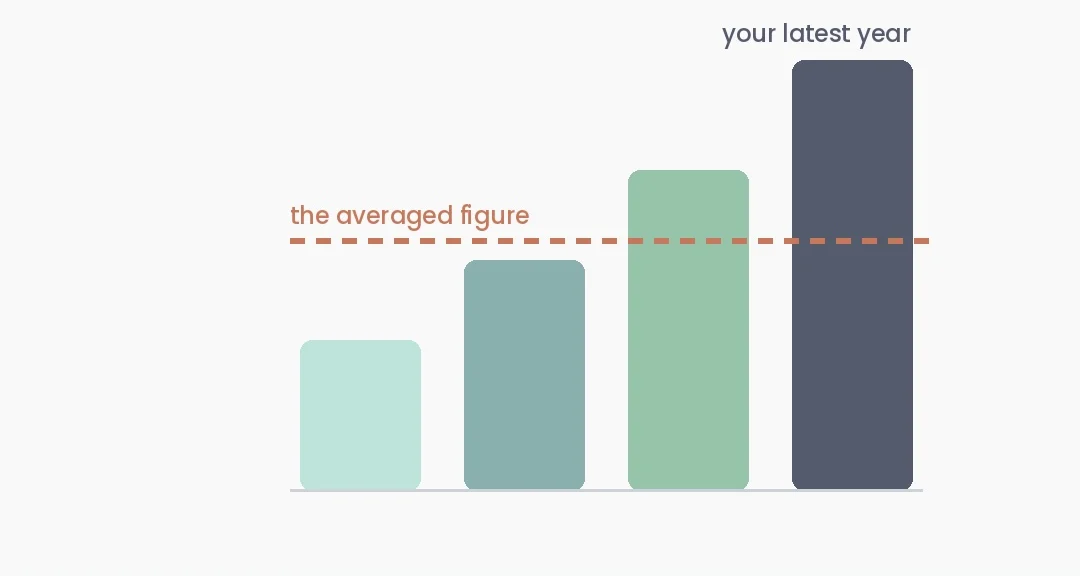
Everything says you’re doing better. Turnover up. Profit up. The pipeline is full. Then a lender looks at your last two or three years’ accounts and blends them into an average. It might be over a year since you filed your latest accounts, so these are old numbers.
It’s one of the quietest ways good business owners get restricted on borrowing. Most never realise it’s happening.
Why lenders average your income
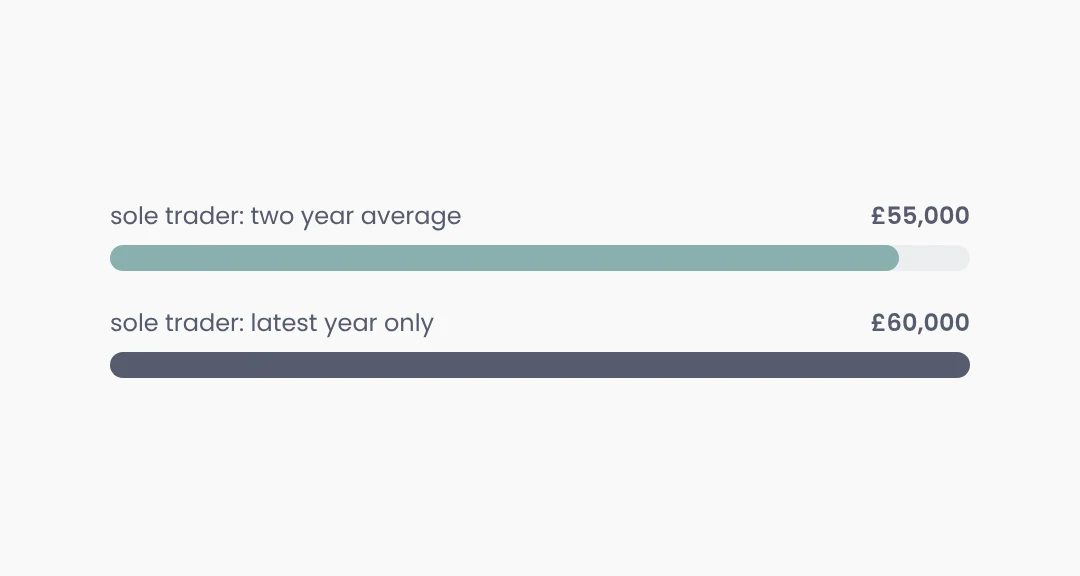
A lot of lenders assess director and self employed income by averaging two or three years of profit. For a flat business, fair enough. For a growing one, it’s punishing. Your strong recent year gets dragged down by weaker older ones, and the figure they lend against reflects a business you’ve already outgrown.
From the lender’s side the logic is simple. Self employed income moves around, and averaging protects them against lending on a one off spike that never repeats. The same rule usually works the other way too: if your latest year is lower than the one before, most lenders will use the lower figure rather than the average.
The timing makes it worse. Accounts are often finalised months after your year end, and your self assessment later still. By the time a lender sees your “latest” figures, they can describe a business as it was well over a year ago.
What a growing business loses
An illustration. Picture a business owner whose share of profit has grown from £60,000 to £90,000 and then to £150,000 over three years.
- A lender that averages three years works from £100,000.
- A lender that averages two years works from £120,000.
- A lender that will use the latest year works from £150,000.
Same person, same accounts. The figures are illustrative only, and each lender applies its own affordability rules on top, but the gap between the first and last line is the difference between the home you want and the one you settle for.
When some lenders will use your latest year
The good news: not every lender works this way. Some will look at your latest year on its own where the trajectory backs it up. Knowing which, and what they’ll want to see, is usually the whole game.
They tend to look for:
- A genuine upward trend. Steady growth reads very differently from a single unusual year.
- An established business. Often at least two years’ trading, although some lenders will consider less.
- Accounts your accountant stands behind. Finalised accounts and, sometimes, a reference or letter from your accountant explaining the increase.
- Income that is likely to continue. A new contract or a repeatable change in the business carries more weight than a one off sale.
How this applies depends on how you are paid. For company directors, some lenders combine the latest year with your share of the company’s net profit, which I cover on our page on mortgages for company directors. For partners in law firms and other professional partnerships, latest year profit share is often the key figure, explained on mortgages for partners. Sole traders can see how it works for them on self employed mortgages.
A real example
Two business owners wanted to raise their mortgage from around £300k to £900k, both of whom had busy, successful and growing businesses. Their profits had jumped in the most recent year. A standard approach would have averaged that strong year against weaker ones and cut the borrowing accordingly. We worked with a lender willing to assess it on the latest year’s profit share, supported by their accountant. It completed.
The growth was real and established, and the standard method was not going to help them.
Timing your application
If your business has just had a strong year, timing matters. A few things are worth discussing early, ideally with your accountant in the room:
- When your latest accounts will be finalised, and whether it makes sense to wait for them
- When your self assessment will be filed, so your SA302 and tax year overview reflect the new figures
- Whether your accountant would be comfortable providing a reference that supports the trend
None of this means changing your tax affairs for the sake of a mortgage. That is a matter for your accountant. It is simply about making sure the lender sees the most recent, accurate picture of the business you actually run.
The one question to ask
We look across the lenders whose criteria fit, whether that’s on the high street, a smaller regional building society who can be flexible, a specialist lender or a private bank, and present your case to the ones most likely to read it fairly. All lending is subject to underwriting and valuation.
So if your business is growing and a mortgage is on the horizon, ask a lender one thing early: “Will you average my last few years, or can you use my most recent year?” The answer tells you very quickly whether they fit a business like yours.
Growth should open doors. Too often the way income gets assessed quietly closes them. It doesn’t have to.
If you’ve had a strong year and you’re wondering whether your borrowing options have kept pace, that’s exactly the kind of conversation worth having before you apply anywhere. If you also draw a modest income for tax reasons, the income tax trap that shrinks your mortgage is worth reading alongside this one.
Your home is at risk if you do not keep up repayments on a mortgage or other loan secured on it.
Wondering how a lender would read your income?
Tell us a little about your situation and we’ll arrange a call.
Talk to an adviser