Limited company vs personal name buy to let: what lenders look at
The mortgage side of buying in a company or in your own name: rent tests, guarantees, rates and paperwork. Tax is a question for your accountant.
Last reviewed:

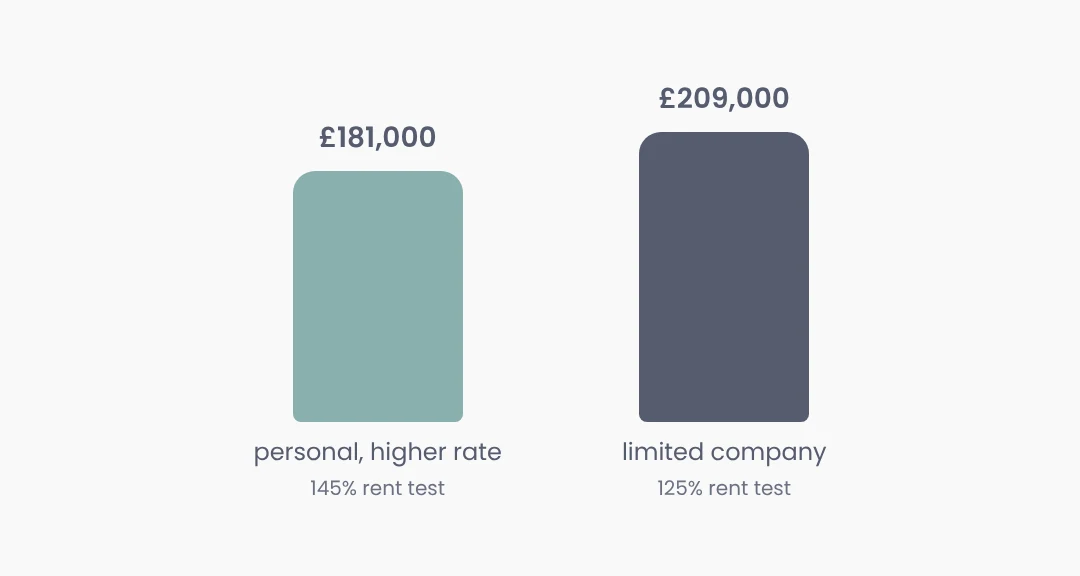
Lenders look at limited company and personal name buy to let in similar ways, but the rent test is often the biggest difference. Many lenders apply a 125% rent cover test to a limited company, against 145% for a higher rate taxpayer buying personally, so the same rent can support a larger loan in a company. Whether a company suits you overall is a tax question, and that advice should come from your accountant.
This article covers the mortgage side only. It is not tax advice.
How do buy to let lenders test the rent?
Buy to let lenders check that the monthly rent covers the mortgage interest by a set margin, called the interest cover ratio (ICR). They calculate it at a stressed interest rate, which is often higher than the rate you would actually pay. The ICR and the stress rate both vary by lender, by product and by how the property is owned.
For a limited company, many lenders use an ICR of 125%. For a basic rate taxpayer buying personally, 125% is also common. For a higher or additional rate taxpayer buying personally, many lenders use 145%, partly because of how mortgage interest is taxed for individual landlords.
Limited company vs personal name: how they compare
The figures below are illustrative only, using rent of £1,200 a month and a stress rate of 5.5%. They are not an offer or a recommendation, and all lending is subject to underwriting and valuation.
| Personal name, higher rate taxpayer | Personal name, basic rate taxpayer | Limited company (SPV) | |
|---|---|---|---|
| Typical rent cover test | 145% | 125% | 125% |
| Illustrative maximum loan | £181,000 | £209,000 | £209,000 |
| Personal guarantee | Not needed, you borrow personally | Not needed, you borrow personally | Usually required from directors |
| Rates and fees | Widest choice | Widest choice | Sometimes higher, varies by lender |
| Extra paperwork | Standard | Standard | Company documents, guarantees, sometimes legal advice on the guarantee |
The maximum loan is the annual rent divided by the ICR and the stress rate. On £1,200 a month, that is £14,400 ÷ (1.45 × 5.5%) for the higher rate case, and £14,400 ÷ (1.25 × 5.5%) for the others. The lender's valuer confirms the rent the property could achieve.
What do lenders look for in a limited company?
Most buy to let lenders prefer a special purpose vehicle (SPV): a company set up only to hold property, usually registered with property SIC codes such as 68100, 68209 or 68320. Lenders then typically want:
- personal guarantees from the directors and main shareholders
- details of who owns the company and in what proportions
- the company's incorporation documents, and accounts once it has traded
- evidence of the deposit, and of where it came from if it is lent by a director
Fewer lenders consider a trading company that also owns property, so the structure is worth settling before you look at the mortgage.
What do lenders look for when you buy personally?
Buying in your own name is the most familiar route for lenders. They usually look at:
- the rent, tested at the stressed rate
- your tax band, which can change the ICR
- whether you own your own home, and any landlord experience
- your personal income, which some lenders use to top up a shortfall in the rent test
Does the rent test favour one route?
For a higher rate taxpayer, the limited company route often supports a larger loan on the same rent, because of the lower ICR. For a basic rate taxpayer, the rent test may be similar either way. Rates, fees and arrangement costs can narrow or reverse any difference, so the comparison should be made on the whole cost, not the loan size alone. Most buy to let mortgages are not regulated by the Financial Conduct Authority.
Where does tax advice fit in?
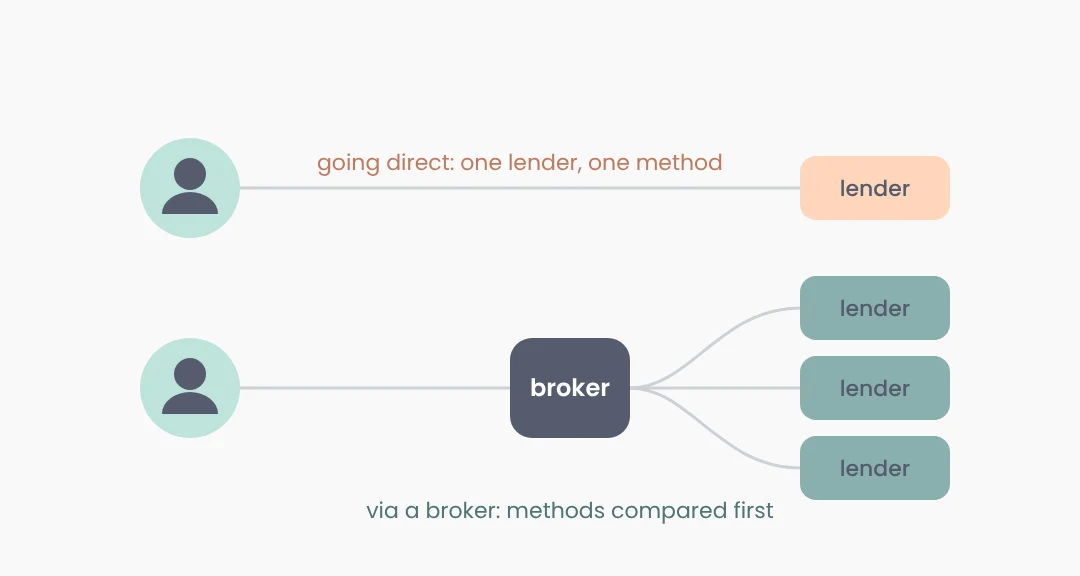
The tax treatment of a limited company and personal ownership is very different, including how mortgage interest is relieved and how profits are taken out. Moving existing properties into a company is usually treated as a sale and can bring tax and legal costs. Those are questions for your accountant and solicitor. Once the structure is decided, a mortgage broker can find lenders whose criteria fit it.
Our page on buy to let mortgages covers rent tests and portfolio landlords, and our guide to SPV mortgages explains the company route in more detail.
Common questions
Is it easier to get a buy to let mortgage through a limited company?
Not easier, but the rent test is often more generous. Many lenders apply a 125% rent cover test to limited companies, against 145% for higher rate taxpayers buying personally, so the same rent can support a larger loan. Rates, fees and paperwork can differ, and all lending is subject to underwriting and valuation.
Do I have to give a personal guarantee on a limited company buy to let mortgage?
Usually, yes. Most lenders ask the directors and main shareholders to give personal guarantees, so you remain personally responsible if the company cannot pay. Independent legal advice on the guarantee is often required.
Can I move my existing buy to let properties into a limited company?
It is possible, but it is usually treated as a sale to the company, which needs a new mortgage and can trigger tax and legal costs. Speak to your accountant and solicitor about the tax and legal side before looking at the mortgage.
What SIC code does a buy to let limited company need?
Most buy to let lenders prefer a special purpose vehicle registered with property SIC codes, such as 68100, 68209 or 68320. Fewer lenders will consider a trading company that also owns property.
Your home is at risk if you do not keep up repayments on a mortgage or other loan secured on it.
Wondering how a lender would read your income?
Tell us a little about your situation and we’ll arrange a call.
Talk to an adviser