When your income lives in four companies, not one payslip
Why the high street sees a fraction of what you really earn, and how some lenders look across every company.
Last reviewed:

A business owner with shares in several companies is often assessed by mortgage lenders on their personal tax calculation alone, which only shows what they have drawn. Some lenders can look at the director's share of profit across each company they own, which can give a far fuller picture of their income. That difference is usually down to the lender, not the complexity of the finances.
Why do lenders undercount income from several companies?
Most lenders are built to read one number: the personal tax calculation, shown on SA302s and tax year overviews. That works well for someone paid a salary and some dividends from one company. It works far less well for a director who owns several trading businesses, holds a different shareholding in each and leaves profit in the companies rather than drawing it all out.
For that director, the personal tax calculation is only a slice of the picture. The rest of their income sits inside the companies, real and theirs, but invisible to a lender that only asks for that one document. When a lender says its system can only use the tax calculation, that is a limit of that lender's process, not a limit on the borrower.
Peter has arranged mortgages for company directors since 1999, and this is one of the most common conversations he has.
How can some lenders look across several companies?
Some lenders will assess a director's share of net profit in each company they hold shares in, alongside their salary, rather than relying on drawings alone. To do that, the lender usually needs:
- two years' accounts for every company the director owns shares in, ideally signed by their accountant
- SA302s and tax year overviews for the same years
- a clear explanation of how the companies connect and who owns what
All lending is subject to underwriting and valuation, and each lender sets its own rules on shareholding, trading history and which companies it will consider.
A recent example
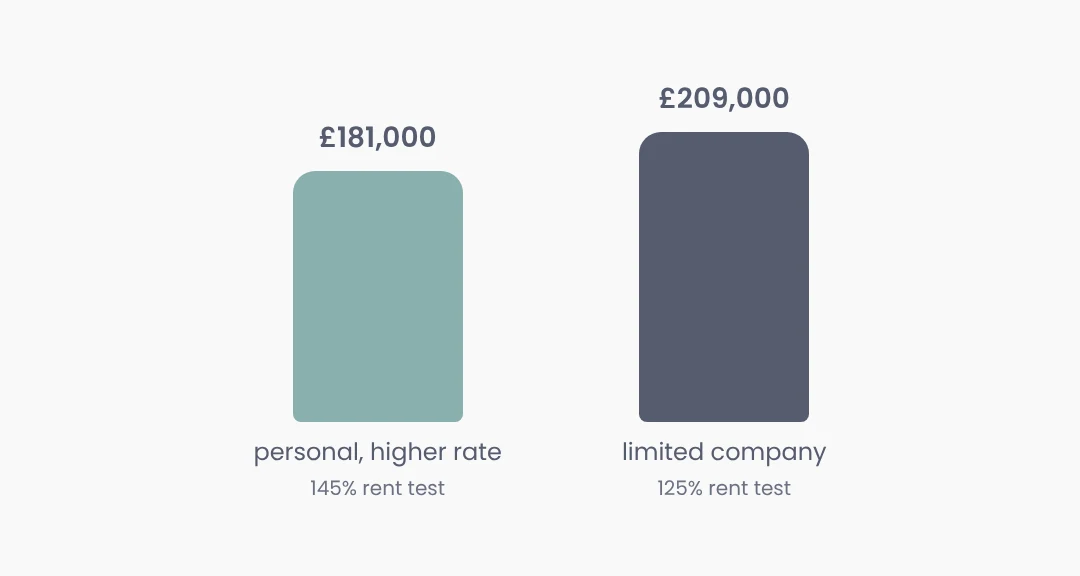
A business owner came to us wanting to buy a home for £1.9m. A high street lender had assessed him on his personal tax calculation alone, and the smaller mortgage that supported would have limited him to buying at around £1.2m. His income was spread across several connected trading companies, and only a fraction of it was being counted. We worked through the profit across those businesses and presented the whole picture, rather than leaning on one tax calculation.
Partway through, an old, unrelated company surfaced: one from years earlier that was by then in the closing stages of an orderly wind down. One lender stepped back when it appeared. We moved to a lender willing to consider the wider picture, and the purchase has since exchanged. Every case is different, and this example does not mean the same outcome is available to anyone else.
What should you ask before accepting a lender's figure?
If your income comes from more than one company, three questions are worth asking:
- Did the lender only use my personal tax calculation, or did it look at the profit inside my companies?
- If my income is spread across connected businesses, did it consider all of them or just one?
- Is there a lender whose method reads my income the way it actually works?
A borrowing figure is not always the figure. Sometimes it is one lender's reading of a picture it only half saw.
What should you have ready?
Old or dormant companies are worth mentioning at the start, because an unexplained company on a search can stall an underwriter. Our page on mortgages for limited company directors sets out the documents directors usually need and the main ways lenders assess director income. If your situation sounds similar, we are happy to talk it through.
Your home is at risk if you do not keep up repayments on a mortgage or other loan secured on it.
Wondering how a lender would read your income?
Tell us a little about your situation and we’ll arrange a call.
Talk to an adviser