Buying property through a limited company: SPV mortgages explained
What changes on the mortgage when the company owns the property.

More landlords now buy through a limited company than in their own names. Most of the conversation is about tax, and rightly so. The mortgage side gets far less attention, yet it is where plenty of purchases slow down.
This piece covers the mortgage side only. Whether a company suits you is a tax question, and your accountant is the right person to answer it.
What an SPV is
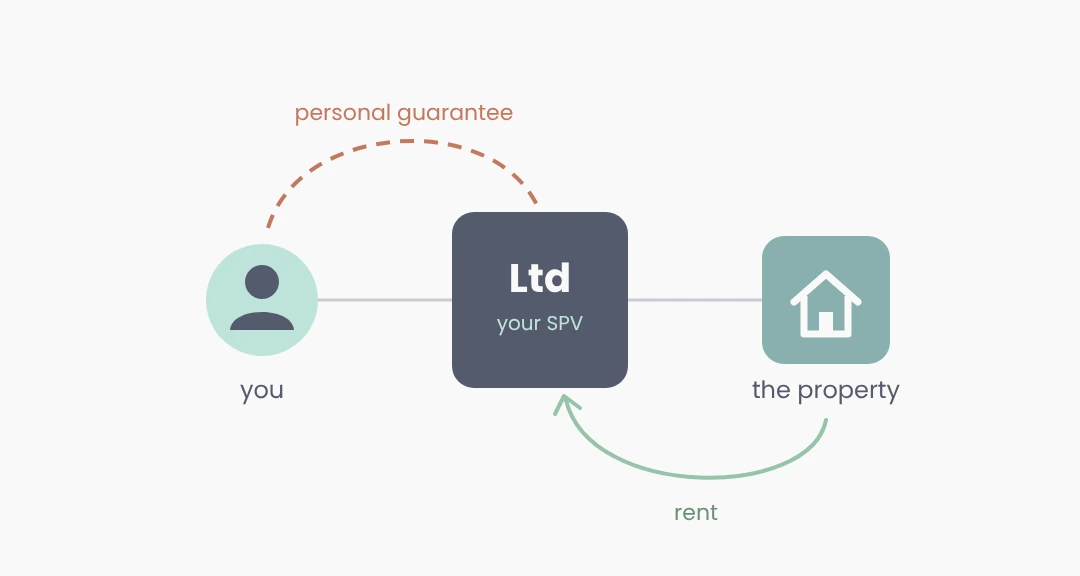
An SPV, or special purpose vehicle, is a limited company set up only to buy, hold and let property. It does nothing else. It has no other trade, no staff and no other income.
Lenders like that simplicity. When the company only holds property, they can see exactly what they are lending against and where the money comes from: the rent.
Most lenders check this through the company’s SIC codes, the activity codes registered at Companies House. Codes such as 68100 (buying and selling own real estate) and 68209 (letting and operating of own or leased real estate) are commonly accepted. A company registered under other codes may need to change them, or may need a lender that is comfortable with a trading company.
Why lenders still look at you
The company borrows, but the lender assesses the people behind it. Expect them to look at:
- Every director and shareholder: usually anyone with a significant shareholding will be credit checked and asked for details.
- Personal guarantees: most lenders ask the directors to guarantee the loan personally. If the company cannot pay, you can be asked to.
- Your experience: some lenders prefer you to own property already. Others accept first time landlords.
- Your income: many lenders set a minimum personal income, even though the rent services the loan.
A new company with no accounts is normally fine. Lenders know an SPV is often set up for the purchase itself.
How much you can borrow
Buy to let borrowing is driven mainly by the rent, not your salary. Lenders test whether the rent covers the mortgage interest by a set margin, calculated at a notional interest rate rather than the rate you actually pay.
For limited companies that margin is often lower than for higher rate taxpayers buying personally. On the same property and the same rent, that can mean a company may be able to borrow more. The exact figures vary by lender and change often, so we check them at the time of your application.
Deposits are typically around 25% of the purchase price, though some lenders go further and some require more.
What it costs
Limited company buy to let rates are often a little higher than personal ones, and arrangement fees are commonly a percentage of the loan. On top of the mortgage, there are company running costs: accounts, a confirmation statement each year, and your accountant’s fees.
Whether those costs are outweighed by the tax treatment is the question to take to your accountant before you set the company up.
Trading companies and holding companies
If you already run a business and want it to buy a property, the picture changes. Fewer lenders will lend to a trading company, and they look closely at the company’s own accounts.
Some landlords set up an SPV owned by an existing holding company instead. That structure is accepted by a number of lenders, but it adds a layer the underwriter will want to understand. If your group already has several companies, this is worth planning before you incorporate. Our piece on income spread across several companies explains how lenders read group structures.
What to have ready
- The company number, registered SIC codes and a structure chart if there is more than one company
- ID and address history for every director and shareholder
- Details of any property you already own, with the rent and mortgage on each
- Proof of deposit, and where it is coming from
- Your personal income evidence, if the lender sets a minimum
Common questions
Can a new limited company get a buy to let mortgage? Yes. Many lenders accept newly formed SPVs with no trading history, because they assess the directors and the rental income instead.
Do I have to give a personal guarantee? Most lenders require one from each director. Some also ask significant shareholders. It means you can be personally liable if the company cannot repay.
Which SIC codes do lenders accept? Codes covering buying, selling and letting property, such as 68100 and 68209, are widely accepted. Lender lists differ, so check before you incorporate.
Should I buy through a company or personally? That depends on your tax position and plans, so it is a question for your accountant. We can then show you how the mortgage options compare either way.
Next step
If you are setting up a company to buy, talk to us before you register it. A five minute check on the SIC codes and shareholding can save weeks later. Our buy to let mortgages page covers portfolio and limited company lending in more detail.
Most buy to let mortgages are not regulated by the Financial Conduct Authority. All lending is subject to underwriting and valuation.
Your home is at risk if you do not keep up repayments on a mortgage or other loan secured on it.
Wondering how a lender would read your income?
Tell us a little about your situation and we’ll arrange a call.
Talk to an adviser