Salary and dividends vs net profit: how UK lenders assess company directors
The three main ways lenders read a director's income, side by side with illustrative figures, and why the method can matter more than the rate.
Last reviewed:

UK lenders assess company directors in three main ways: on the salary and dividends drawn, on salary plus the director's share of the company's net profit, or on salary and dividends with retained profit taken into account. On the same accounts, these methods can produce very different income figures. For a company director, choosing a lender whose method suits how they are paid often matters more than the rate.
Why do lenders disagree about a director's income?
A company director decides how much to draw and how much to leave in the company. That is sensible tax and business planning, but it means the director's personal tax return does not show everything the company earns. Each lender decides how much of the company's profit it is prepared to treat as the director's income.
Approach 1: salary and dividends
Most lenders use the salary and dividends the director has drawn, taken from SA302s and tax year overviews. Many average the last two years. If the latest year is lower, most use the lower figure.
This approach is simple and widely available. It tends to understate income for directors who keep drawings low and leave profit in the company, and for directors whose income has recently risen.
Approach 2: salary plus share of net profit
Some lenders use the director's salary plus their share of the company's net profit after corporation tax. Net profit includes profit paid out as dividends and profit retained in the company, so it is not counted twice. The share follows the director's shareholding: a 50% shareholder is credited with half the net profit.
This approach tends to suit directors who leave profit in the business. Lenders that use it usually want two years of accounts, and often an accountant's reference.
Approach 3: retained profit considered
Some lenders start from salary and dividends but take the company's retained profit into account when deciding which year to use. Where the company has built up profit in reserve, the lender may accept the latest, higher year of drawings rather than a two year average, because the reserves show the income is sustainable.
This approach sits between the other two. It tends to suit directors whose drawings have risen and whose company holds healthy reserves.
The three approaches compared
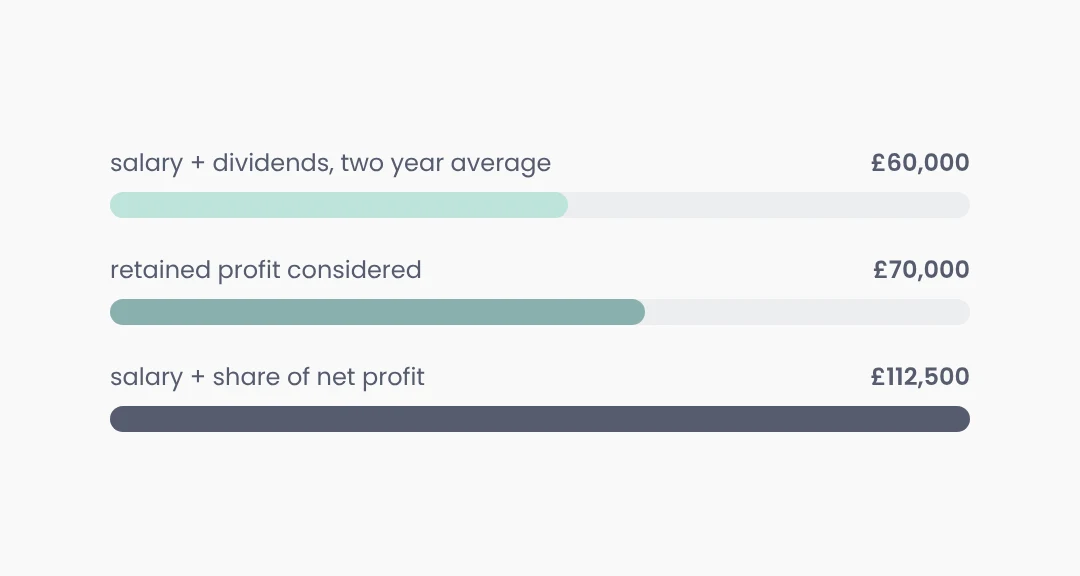
The figures below use one director, with illustrative numbers: 100% shareholding, salary of £12,500, dividends of £57,500 this year and £37,500 last year, and company net profit after corporation tax of £100,000 this year. The borrowing ranges use simple multiples of 4.5 to 5.5 times income. They are not an offer or a recommendation, and all lending is subject to underwriting and valuation.
| Salary and dividends | Salary plus share of net profit | Retained profit considered | |
|---|---|---|---|
| What is counted | Salary and dividends drawn, averaged over two years | Salary plus 100% of net profit after corporation tax | Salary and latest year's dividends, supported by reserves |
| Illustrative income | £60,000 | £112,500 | £70,000 |
| Illustrative borrowing range | £270,000 to £330,000 | £506,000 to £619,000 | £315,000 to £385,000 |
| Evidence usually needed | SA302s and tax year overviews | Two years' accounts, often an accountant's reference | SA302s, tax year overviews and accounts |
| Tends to suit | Steady drawings, simple structure | Profit retained in the company | Rising drawings, healthy reserves |
The income figure ranges from £60,000 to £112,500 for the same person and the same accounts. What a lender may actually offer also depends on outgoings, credit history, deposit and its own affordability checks.
Which approach is right for you?
The right approach depends on how you pay yourself, not on which figure is largest. A director who draws nearly all the profit may do well on salary and dividends, with a wide choice of lenders and rates. A director who leaves most profit in the company is more likely to need a lender that counts net profit. Shareholding, the number of companies, and how long the company has traded also narrow the field.
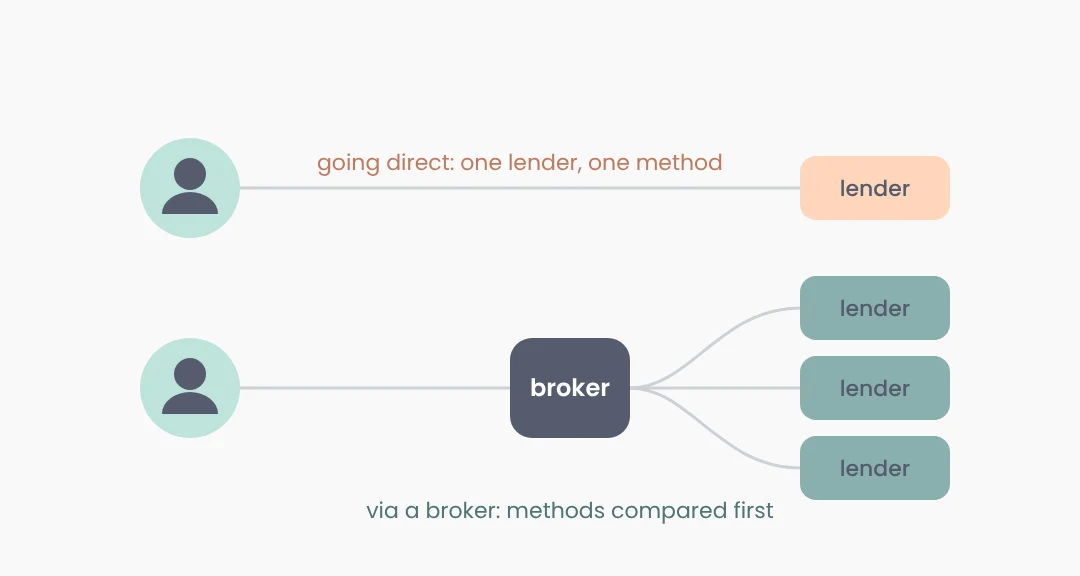
Decisions about salary, dividends and retained profit are for you and your accountant. A specialist broker's job is to find lenders who can read the income you already have.
What should a director have ready?
Most lenders ask company directors for:
- two years' accounts for each company you own shares in, ideally signed by your accountant
- SA302s and tax year overviews for the same years
- recent business and personal bank statements
- details of your shareholding and how long you have held it
Our page on mortgages for limited company directors covers shareholding, multiple companies and documents in more detail, and our self employed mortgage calculator shows these readings side by side with your own figures.
Common questions
Do mortgage lenders use salary and dividends or net profit for company directors?
Most UK lenders use the salary and dividends a director has drawn, often averaged over two years. Some use salary plus the director's share of the company's net profit, which includes profit left in the business. Which method a lender uses can change the income figure considerably.
Does leaving profit in my company reduce how much I can borrow?
With lenders that only count salary and dividends, yes, because retained profit is not counted. With lenders that use salary plus a share of net profit, retained profit can be included. All lending is subject to underwriting and valuation.
Do lenders use company profit before or after corporation tax?
Most lenders that use company profit take the figure after corporation tax. A smaller number use profit before corporation tax. Either way, the figure is usually adjusted for your shareholding.
How many years of accounts does a company director need for a mortgage?
Many lenders ask for two years of accounts, SA302s and tax year overviews. Some will consider one year, particularly where the director has a track record in the same field.
What shareholding do I need for a lender to use net profit?
Lenders that use net profit usually look for a meaningful shareholding, often 20% or 25% or more. Below that, many lenders assess a director more like an employee and may not count dividends in full.
Your home is at risk if you do not keep up repayments on a mortgage or other loan secured on it.
Wondering how a lender would read your income?
Tell us a little about your situation and we’ll arrange a call.
Talk to an adviser